

The Trust’s
mission.
BFT has ambitious plans that will see the whole fort brought back into varied and exciting community use. As a non-profit making Charitable Trust all monies after payment to any staff and overheads will be invested into the building fabric and immediate environment to ensure safe and secure access and long term protection for this unique building.
Bembridge Fort Trust aims to restore and preserve the fort, ensuring its historical significance is safeguarded, interpreted, and promoted. This includes maintaining architectural integrity, addressing any structural issues, and enhancing visitor experiences while providing events to engage visitors and raise awareness about the fort’s history and importance of its role in wartime. The plan is to not only save Bembridge Fort as a building, but also create something that will leave a lasting legacy for future generations to celebrate the Fort’s unique history.
The Vision
Promote for the benefit of the public the preservation and protection of the historic building known as Bembridge Fort located on the Isle of Wight, alongside other fortifications on and around the Isle of Wight that are of significant historic value.
To advance the education of the public in the history and architecture of Bembridge Fort (and other fortifications on and around the Isle of Wight that are of significant historic value) in particular but not exclusively by the provision of information, lectures, workshops, conferences.
To establish Bembridge Fort as a leading heritage-led tourist attraction and events destination on the South Coast, where history, culture, learning and community combine to create memorable experiences and sustainable income, helping to grow and preserve this historic attraction. A fort for the 21st century.
Strategic Aims
- Establish Bembridge Fort as a leading heritage and events destination
- Deliver a commercially viable events and attraction programme which focuses on all year round trade and interest
- Increase visitor numbers and audience diversity
- Deliver memorable, high-quality visitor experiences
- Develop a sustainable and resilient income model
- Grow community engagement and participation
- Ensure safe, professional and compliant operations
- Enhance the Fort’s profile and reputation
- Create full time employment opportunities and a resilient volunteer network
- Reduce reliance on grant funding while reinvesting any bottom line income back into the continued development and conservation

History
Built between 1862 and 1867, Bembridge Fort formed part of Britain’s Victorian coastal defense network known as the Palmerston Forts. Constructed during a period of growing tension with France, the fort was designed to defend the eastern approaches to the Solent and protect the naval base at Portsmouth. Over the decades, the site evolved from military stronghold to historic landmark, preserving a remarkable chapter of the Isle of Wight’s coastal heritage.
“History is written in stone, but remembered through the faces of those who stood watch.”

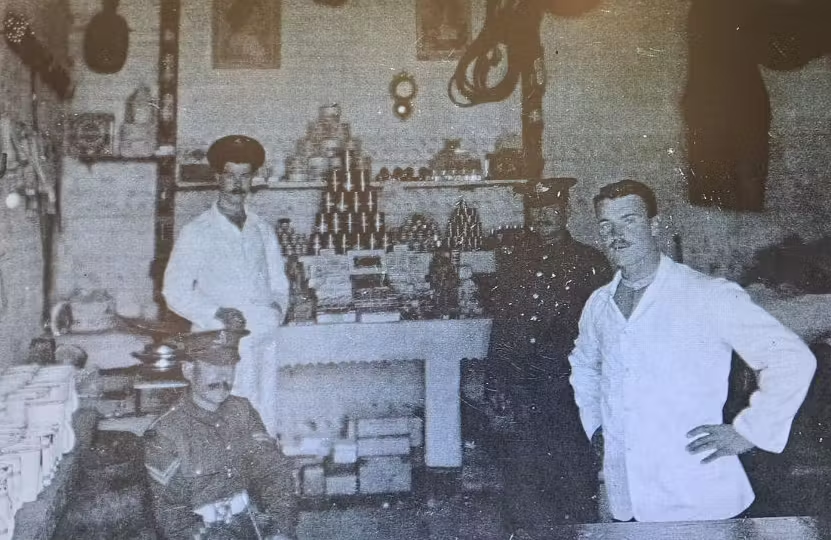


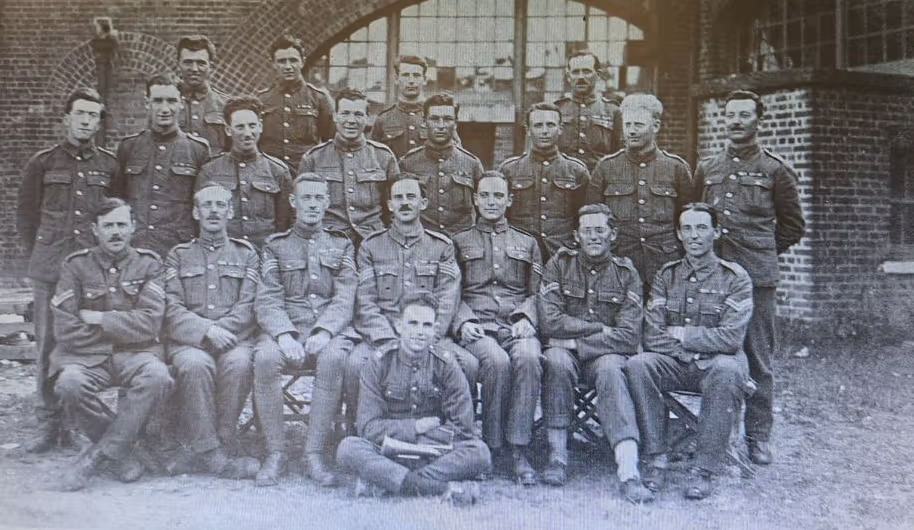
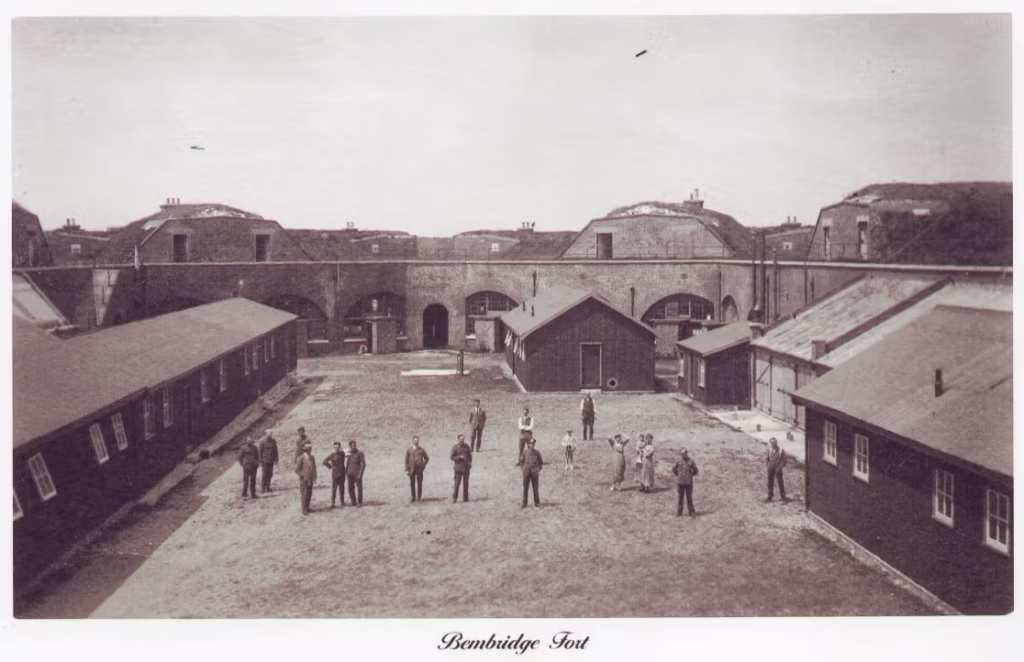

Where it began
Bembridge Fort is a Palmerston-era fort, one of 18 on the Isle of Wight along with four Solent forts. It was built between 1862 and 1867 to defend Sandown Bay and other gun batteries in the immediate area as a response to the perceived threat of a French invasion.
WWII Revival
It fell into disuse by WW1 but was reactivated between 1937 – 1945 when the Fort played a pivotal role in the defence of the Isle of Wight and the south coast. During WW2, the fort was one of the most secret places in Great Britain because of its role in the development of radar, a centre for loop detection, hydrophones and remote minefield systems. Anti-aircraft and search light batteries were installed as part of the fort’s defences and the fort also played a key role in D-Day.
Abandoned wreckage
The fort was abandoned by the Ministry of Defence between 1957 – 1965, but Bembridge Fort Trust intends to highlight the fort’s invaluable contribution to the defence of Britain and the Island during WW2.
In the intervening ten years the fort was vandalised and stripped of many features.
Hope builds
However, in the early 1960s Culver Down was purchased by the Isle of Wight County Council. Then, in 1967 the headland, including the fort, was sold to the National Trust as part of Project Neptune, a plan to purchase and preserve Britain’s coast.
Industrial use
In 1968 the National Trust leased the fort to a commercial company, Micron Air, who still occupy one end of the fort with their factory workshops.
The start of history telling
Approx. 20 years ago, a team of volunteers working with the National Trust started a limited site clearance. The volunteers managed to clear one of the defensive caponiers and some areas of the fort to enable a small number of pre-booked guided tours which have continued to this day.